
QUENTIN TARANTINO:
Cult Movie Wall Art Celebrating Stylized Cinema
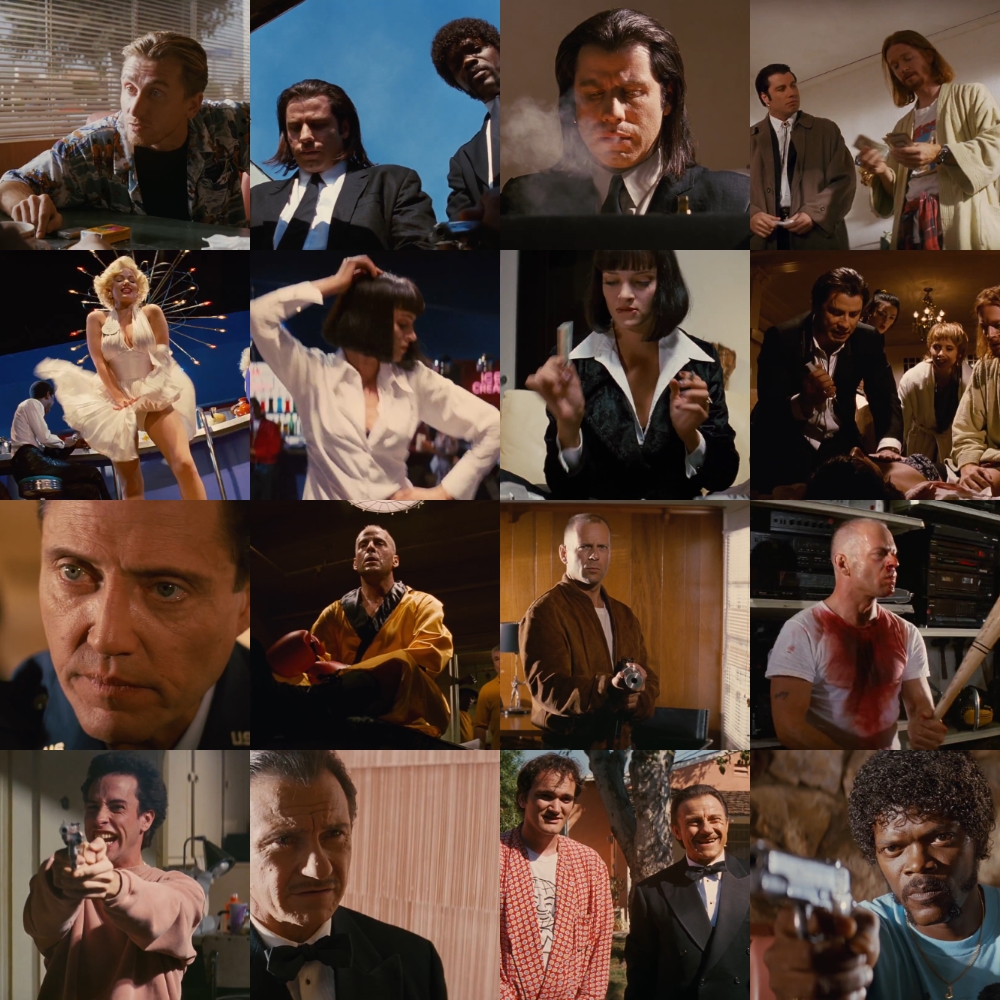
Quentin Tarantino: Cult Movie Wall Art Celebrating Stylized Cinema
Few directors in modern cinema have developed a visual and narrative style as instantly recognizable as Quentin Tarantino. From his groundbreaking debut with Reservoir Dogs to the pop culture phenomenon of Pulp Fiction, from the revenge fantasies of Kill Bill to the historical revisionism of Inglourious Basterds and Django Unchained, Tarantino has created a body of work that is both deeply indebted to cinema history and utterly original.
At NicDA, the Movie Mosaic collection pays tribute to Tarantino’s extraordinary filmography through cult movie wall art that captures the essence of his most celebrated films. Each artwork transforms key moments from Tarantino’s masterpieces into unique modern movie art print pieces, preserving the stylized violence, sharp dialogue, and unforgettable characters that define his filmmaking.
The Tarantino Style: A Cinematic Language All His Own
Quentin Tarantino emerged in the early 1990s as a voice unlike any other in American cinema. His films are characterized by nonlinear storytelling, pop culture references, stylized violence, extended dialogue scenes, and soundtracks that blend surf rock, soul, and obscure 1970s tracks into something uniquely Tarantino.
What sets Tarantino apart is his ability to blend genres seamlessly. His films are crime dramas, Westerns, war films, and revenge thrillers all at once, held together by a distinctive sensibility that is unmistakably his own. He is a director who wears his influences on his sleeve, paying homage to the cinema he loves while creating something entirely new.
Tarantino’s films are also defined by their unforgettable characters. From hitmen and gangsters to Nazi hunters and freed slaves, his characters speak in a hyper-stylized vernacular that has become as iconic as the films themselves. For collectors of gallery wall movie art, Tarantino’s filmography offers a wealth of powerful imagery.
Pulp Fiction: A Cultural Phenomenon
When Pulp Fiction was released in 1994, it changed the landscape of independent cinema forever. The film, which won the Palme d’Or at Cannes and became a cultural phenomenon, was unlike anything audiences had ever seen before. Its nonlinear structure, its blend of comedy and violence, its unforgettable dialogue—Pulp Fiction was a revelation.
The film’s characters have become iconic. Jules Winnfield, played by Samuel L. Jackson, with his biblical recitations and philosophical musings; Vincent Vega, played by John Travolta, in a career-reviving performance; Mia Wallace, played by Uma Thurman, with her iconic bob and twist contest.
The visual language of Pulp Fiction is equally memorable. The diner, the dance floor, the basement, the apartment—every location is a carefully constructed stage for Tarantino’s characters to inhabit. For those seeking film wall art decor, Pulp Fiction offers some of the most recognizable imagery in cinema history: the twirling dance, the briefcase, the blood-splattered car, the “Royale with Cheese” conversation.
The Movie Mosaic collection includes multiple works inspired by Pulp Fiction, each capturing key moments from this modern classic. These pieces celebrate the film’s cultural impact through the meticulous movie collage art technique.
Reservoir Dogs: The Birth of a Movement
Before Pulp Fiction, there was Reservoir Dogs. Tarantino’s 1992 debut feature introduced audiences to his unique sensibility: the nonlinear structure, the pop culture references, the stylized violence, and the sharp dialogue. The film, about a group of criminals who turn on each other after a botched heist, was shot on a modest budget but became an instant classic.
The film’s characters, known only by color-coded aliases (Mr. White, Mr. Orange, Mr. Blonde, Mr. Pink), represent a cross-section of criminal archetypes. Their interactions, particularly the extended opening diner scene, showcase Tarantino’s gift for dialogue and character building.
For fans of cult movie wall art, Reservoir Dogs offers powerful imagery: the bloody standoff, the iconic opening walk in black suits, the infamous ear-cutting scene. These images have become synonymous with independent cinema’s early 1990s renaissance.
Inglourious Basterds: Rewriting History
With Inglourious Basterds (2009), Tarantino turned his attention to World War II, creating a revenge fantasy that rewrote history in spectacular fashion. The film follows a group of Jewish-American soldiers who terrorize Nazis in occupied France, culminating in the assassination of Adolf Hitler.
The film is a masterclass in tension-building. The opening scene, in which Colonel Hans Landa interrogates a French farmer about hidden Jews, is one of the most suspenseful sequences ever committed to film. The chapter structure, the use of subtitles, the carefully calibrated violence—everything about Inglourious Basterds reflects Tarantino’s maturity as a filmmaker.
The film’s characters have become iconic in their own right: Brad Pitt’s Aldo Raine, with his Tennessee accent and “Nazi scalps” mission; Christoph Waltz’s Hans Landa, a performance that earned him an Academy Award; and Mélanie Laurent’s Shosanna Dreyfus, whose cinema-burning climax provides one of the film’s most powerful moments.
For collectors of modern movie art print pieces, Inglourious Basterds offers imagery that is both powerful and provocative.
Django Unchained: A Western Reimagined
In Django Unchained (2012), Tarantino created a Western that was both a tribute to the genre and a radical reimagining of its conventions. The film follows Django Freeman, a freed slave who teams up with a German bounty hunter to rescue his wife from a brutal plantation owner.
Django Unchained is a revenge fantasy that confronts the horrors of slavery head-on while delivering the visceral thrills of a classic Western. The film features one of Tarantino’s most memorable characters in Django, played by Jamie Foxx, and a chilling villain in Calvin Candie, played by Leonardo DiCaprio.
The film’s visual style is rich and varied, from the snow-covered landscapes to the opulent interiors of Candie’s plantation. For those seeking gallery wall movie art, Django Unchained offers a wealth of powerful imagery.
Limited Edition Tarantino Artwork for Film Lovers
For fans of Quentin Tarantino and collectors of film fan art print pieces, his filmography offers an unparalleled wealth of inspiration. His films are not just movies; they are cultural events, works of art that have shaped the way we understand cinema and visual storytelling.
The Movie Mosaic collection at NicDA offers limited edition artworks that transform Tarantino’s most powerful moments into lasting visual tributes. Each piece captures the essence of the film through a meticulous arrangement of frames selected from key scenes, allowing viewers to rediscover the story scene by scene.
Explore the Movie Mosaic collection and discover how Tarantino’s unique vision has been reimagined through cinematic photo collage pieces. Each artwork is a tribute to a director whose films have defined modern cinema, capturing the unforgettable characters and impactful narratives that continue to resonate deeply within popular culture.

